
 Hover to Zoom
Hover to Zoom
Hover to Zoom
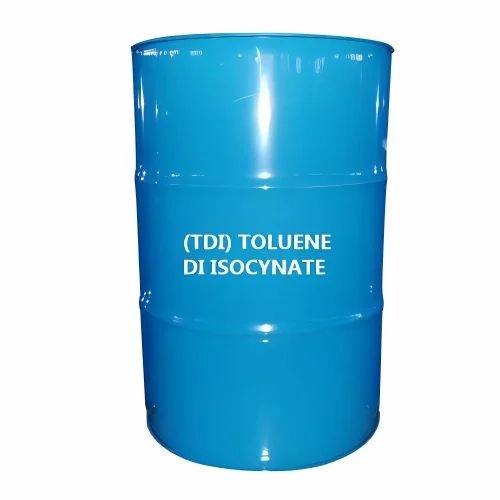
Toluene Diisocyanate (TDI) is a colorless to pale-yellow liquid mainly used to manufacture polyurethane foams, coatings, adhesives, sealants, and elastomers. It reacts with polyols to produce polyurethane materials. TDI is an important industrial chemical but is toxic and irritating, so proper handling, ventilation, PPE, and safety precautions are required.
Toluene Diisocyanate (TDI) is an important industrial chemical widely used in the production of polyurethane-based materials. It is commonly available as a mixture of different isomers, mainly 2,4-TDI and 2,6-TDI. TDI is generally a colorless to pale-yellow liquid with a strong, noticeable odor. It is highly reactive with compounds containing active hydrogen groups, particularly polyols, which makes it valuable for polyurethane manufacturing.
The primary application of TDI is the production of flexible polyurethane foam. This foam is extensively used in mattresses, furniture cushions, automotive seats, headrests, carpets, and other comfort products. TDI is also used in manufacturing coatings, adhesives, sealants, elastomers, and specialty polyurethane products. Its chemical reactivity allows manufacturers to produce materials with different levels of flexibility, durability, hardness, and resistance depending on the formulation.
TDI is produced industrially from toluene through a series of chemical processes involving nitration, reduction, and phosgenation. The resulting product must be handled carefully because isocyanates are chemically reactive substances. TDI can react with moisture and water, potentially producing carbon dioxide and other reaction products. Therefore, storage containers should be kept tightly closed and protected from moisture.
From a safety perspective, TDI requires strict industrial handling procedures. Exposure to its vapors or aerosols can irritate the eyes, skin, nose, throat, and respiratory system. Repeated or significant exposure may cause respiratory sensitization in susceptible individuals. Appropriate engineering controls, ventilation, protective gloves, safety goggles, protective clothing, and suitable respiratory protection should be used according to the applicable Safety Data Sheet (SDS) and workplace regulations.
TDI is normally transported and stored in properly approved containers under controlled conditions. Storage areas should be dry, cool, well ventilated, and protected from incompatible materials. Workers handling TDI should receive appropriate chemical-safety training and understand emergency procedures for spills, leaks, and exposure.
Overall, Toluene Diisocyanate (TDI) is a key raw material for the polyurethane industry. Its high reactivity and versatility make it particularly valuable for producing flexible polyurethane foams and various industrial polyurethane products. Because of its hazardous properties, however, responsible handling, storage, transportation, and workplace safety practices are essential.
Share your required quantity, grade, packaging and destination with our team for a quotation.